


Exchange-traded funds (ETFs) have become a cornerstone of modern investing in Australia, offering a simple way to diversify a portfolio without having to buy individual stocks. But with hundreds of options available on the ASX and beyond, how do you choose the right one?
This guide will walk you through the main types of ETFs, from simple index funds to more complex strategies like the ASX inverse ETF, and show you how to start your journey with leading ETF brokers like Tiger Brokers Australia.
Active vs Passive ETFs: What are they?
At their core, ETFs are investment funds that hold a basket of assets (like stocks or bonds) but trade on an exchange just like a single stock. They are generally categorised as either passive or active.
Passively managed ETFs aim to replicate the performance of a specific market index, like the ASX 200 or the S&P 500. They are the most common and are known for their low brokerage fees.
Actively managed ETFs have a fund manager or team actively making decisions about the portfolio, trying to outperform the market. These make up a very small portion of the overall ETF market.
Five types of ETFs
There are a few types of ETFs currently available to investors, each with its own basket of companies specifically tailored to the ETF's purpose and creation.
1. Bond ETFs
Bond ETFs invest in various income securities, and like stock ETFs, they are grouped into certain categories. Their income distribution depends on the performance of the underlying bonds.
They might include government bonds, corporate bonds, and state and local bonds. Unlike the underlying instruments, which normally come with a long period of maturity, bond ETFs do not have a maturity date. Examples of some well-known bond ETFs are the Vanguard Total International Bond ETF (BNDX), iShares Short Treasury Bond ETF (SHV) and the SPDR S&P/ASX Australian Bond ETF (ASX: BOND).
2. Stock ETFs
Stock ETFs are comprised of a basket of stocks that track a single industry or sector. For example, a stock ETF might track automotive, tech or foreign stocks. A example is the Vanguard MSCI Index International Shares ETF (ASX: VGS). This ETF tracks the returns of the MSCI World ex-Australia Index, giving investors immediate exposure to over 1,400 companies listed in developed countries around the world.
The aim is to provide diversified exposure to a single industry, one that includes high performers and new entrants with potential for growth. Unlike stock mutual funds, stock ETFs have lower fees and do not involve actual ownership of securities.
3. Industry/Sector ETFs
Industry or sector ETFs are funds that focus on a specific sector or industry. Industry/Sector ETFs give you access to a very small part of the overall market, such as energy, real estate, fashion, and health care, among others. Sector ETFs offer varied stability, depending on which industry you select. An example of a popular tech ETF is the ASX-listed Global X FANG+ ETF (ASX: FANG), which tracks the NYSE FANG+ Index, which includes the original FAANG companies like Meta (formerly Facebook), Amazon, Apple, Netflix, and Alphabet (formerly Google), plus other major innovators.
4.Currency ETFs
Currency ETFs are pooled investment vehicles that track the performance of currency pairs, consisting of domestic and foreign currencies. An example of this type of ETF is the Invesco DB US Dollar Index Bullish Fund (UUP). This particular ETF tracks the performance of the US dollar against a basket of foreign currencies, including the Euro, Japanese Yen, British Pound, Canadian Dollar, Swedish Krona, and Swiss Franc.
Currency ETFs can be used to speculate on the prices of currencies based on political and economic developments in a country. They are also used to diversify a portfolio or as a hedge against volatility in forex markets by importers and exporters.
5.Commodity ETFs
Commodity ETFs usually focus on physical commodities, such as agricultural goods, natural resources, and precious metals. Examples of commodity ETFs are Perth Mint Gold (ASX: PMGLD), The BetaShares Global Energy Companies ETF (ASX: FUEL), focusing on energy stocks, including Chevron, ExxonMobil and Royal Dutch Shell, and the United States Oil Fund (USO)that focuses on the oil space, with exposure to crude oil prices, primarily through futures contracts.
A commodity ETF is usually focused on either a single commodity held in physical storage or investments in the commodities futures contract. Long-term investors should consider the security of underlying assets, such as the “contango” and “roll cost ” problems.
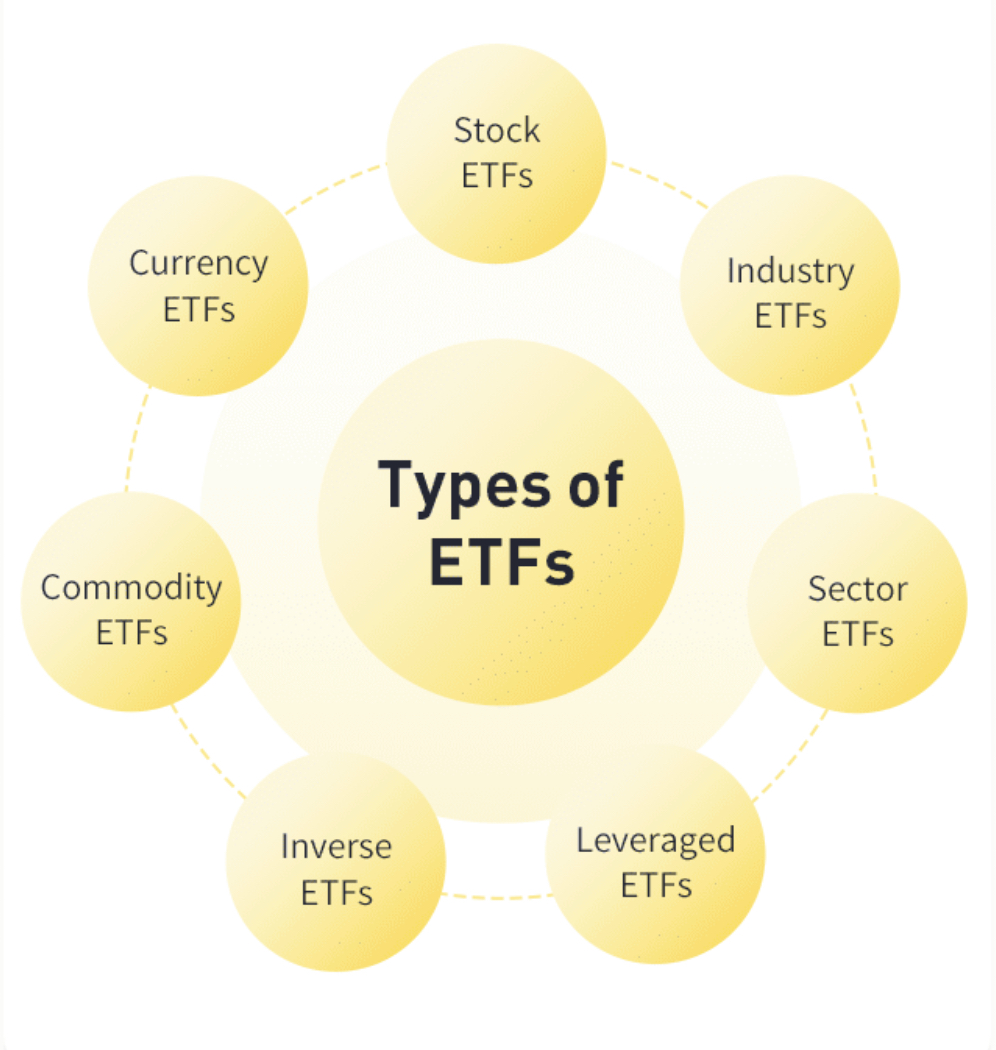
Advanced strategies: leveraged & ASX inverse ETFs
For experienced traders, some platforms offer more complex products. Leveraged and Inverse ETFs are designed for short-term speculation and are not suitable for beginners or long-term auto investments.
Inverse ETFs
When the stock market is falling, or a particular market sector or commodity is struggling, individual investors can make bearish trades that will profit from those declines. Shorting is done by selling a stock when expecting a decline in value, and repurchasing it at a lower price.
Traditionally, this meant that investors had to be able to short stocks or use options, but now there is another way to profit from the downside of the market using inverse ETFs. An inverse ETF is a fund designed to deliver returns that are opposite to the performance of the index or benchmark it tracks. Simply put, if the underlying index falls in value, the inverse ETF rises, allowing investors to profit from a downturn. Inverse ETFs are quite common across various asset classes, including equity, currency, fixed income, and alternatives.
Leveraged ETFs
Leverage involves borrowing to amplify the returns of an investment. This means that potential gains, but also losses, can be increased. For instance, if the S&P 500 rises 1%, an S&P 500 ETF Bull ETF will return 2% (and if the index falls by 1%, the ETF would lose 2%). However, leveraged ETFs such as triple-leveraged (3x) ETFs come with considerable risk and are not appropriate for long-term investing.
Risks associated with L&I ETFs
Inverse and leveraged ETFs (L&I) can be great for short-term trades, but their risks should not be ignored.
Like ETFs, the risks of L&I ETFs can include counterparty risk, market risk, tracking errors, trading at a discount or premium, foreign exchange risk, and liquidity risk. In addition, L&I ETFs are complicated instruments that should only be used by sophisticated investors who fully understand the terms, investment strategy and risks associated with them.
⚠️ Important Warning: Investors should be aware of certain specific risks involved in trading L&I ETFs. These risks include, but are not limited to:
1. Use of leverage and derivative instruments
Many L&I ETFs use leverage and derivative instruments to achieve their stated investment objectives. As such, these L&I ETFs can be extremely volatile and carry a high risk of substantial losses.
These L&I ETFs are considered speculative investments and should only be used by investors who fully understand the risks and are willing and able to absorb potentially significant losses.
2. Most L&I ETFs seek daily target returns
Most L&I ETFs "reset" daily, meaning that they are designed to achieve their stated objectives on a daily basis. Due to the effect of compounding, the return for investors who invest for a period longer than one trading day may vary significantly from the L&I ETF's stated goal as well as the target benchmark's performance.
This is especially true in very volatile markets or if a leveraged ETF is tracking a very volatile underlying index. Investments in L&I ETFs must be actively monitored on a daily basis and are typically not appropriate for a buy-and-hold strategy.
3. Higher operating expenses and fees
Investors should be aware that leveraged ETFs typically rebalance their portfolios on a daily basis in order to compensate for anticipated changes in overall market conditions. This rebalancing can result in frequent trading and increased portfolio turnover. L&I ETFs will therefore generally have higher operating expenses and investment management fees than other passive ETFs.
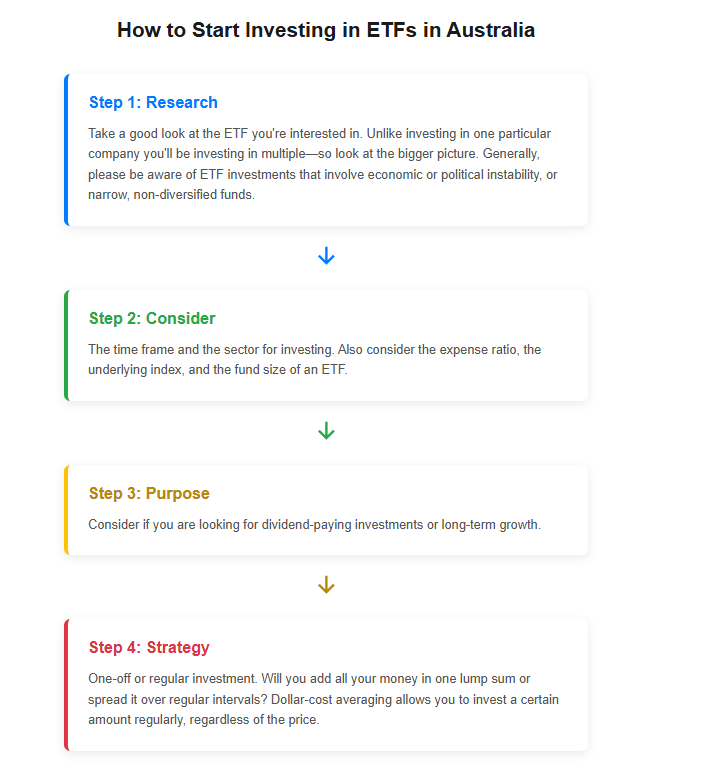
How to start investing in ETFs in Australia
Ready to begin? Here’s a simple four-step process that will help you discover the right ETFs for your portfolio.
Step 1-Research:
Take a good look at the ETF you're interested in, unlike investing in one particular company, you'll be investing in multiple, so look at the bigger picture. Generally, be aware of ETF investments that involve economic or political instability, narrow, or non-diversified funds.
Step 2-Consider:
The time frame and the sector for investing. Also, the expense ratio, the underlying index, and the fund size of an ETF.
Step 3-Purpose:
Consider whether you are looking for dividend-paying or long-term growth.
Step 4-Strategy:
One-off or regular investment? Will you add all your money to the purchase of the ETF in one lump sum, or will you choose to spread that money over regular intervals? Dollar-cost averaging allows you to invest a certain amount regularly, regardless of what the price is.
How to trade ETFs on Tiger Trade
Tiger Trade makes it simple to trade ETFs. Follow the steps below to start your ETF investment journey:
Download Tiger Trade from the App Store or Google Play.
Open an account and fund it.
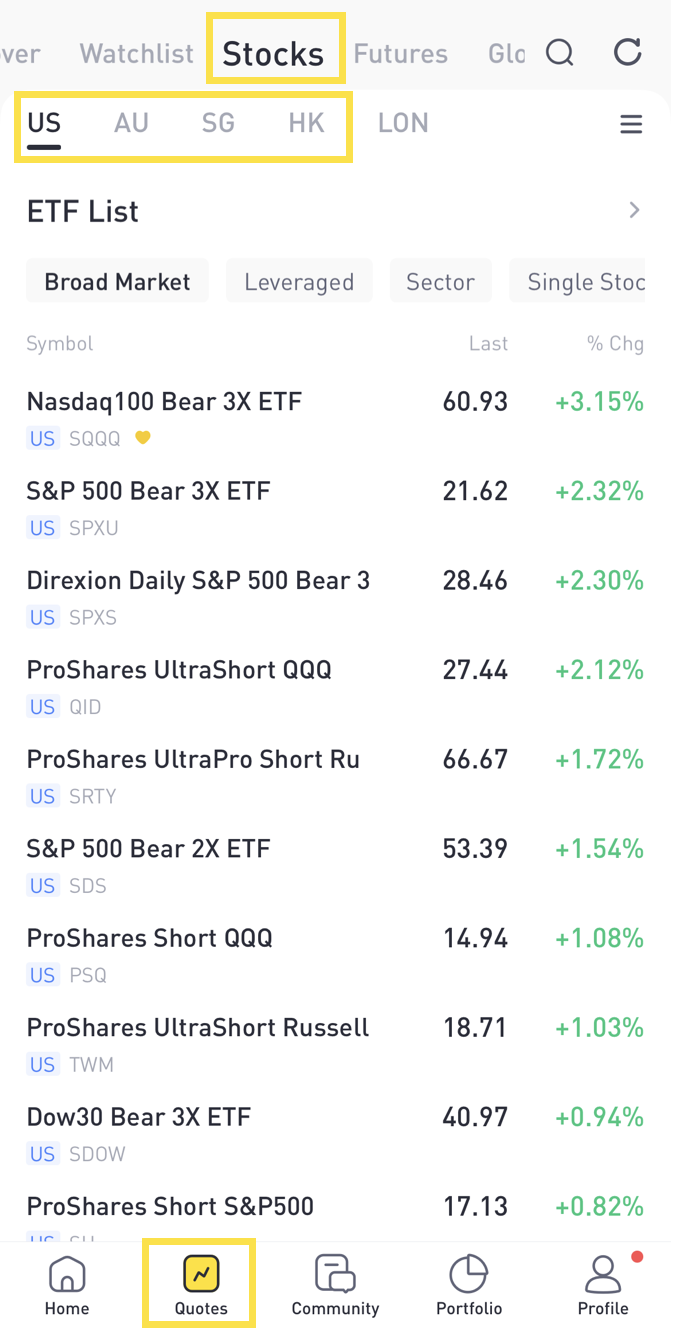
If you have no idea which ETF to trade, look through the ETFs list in the US, AUS, SG, and HK stock markets to get some ideas.
But if you have the intention of trading a specific ETF, search for it and add it to your watchlist.
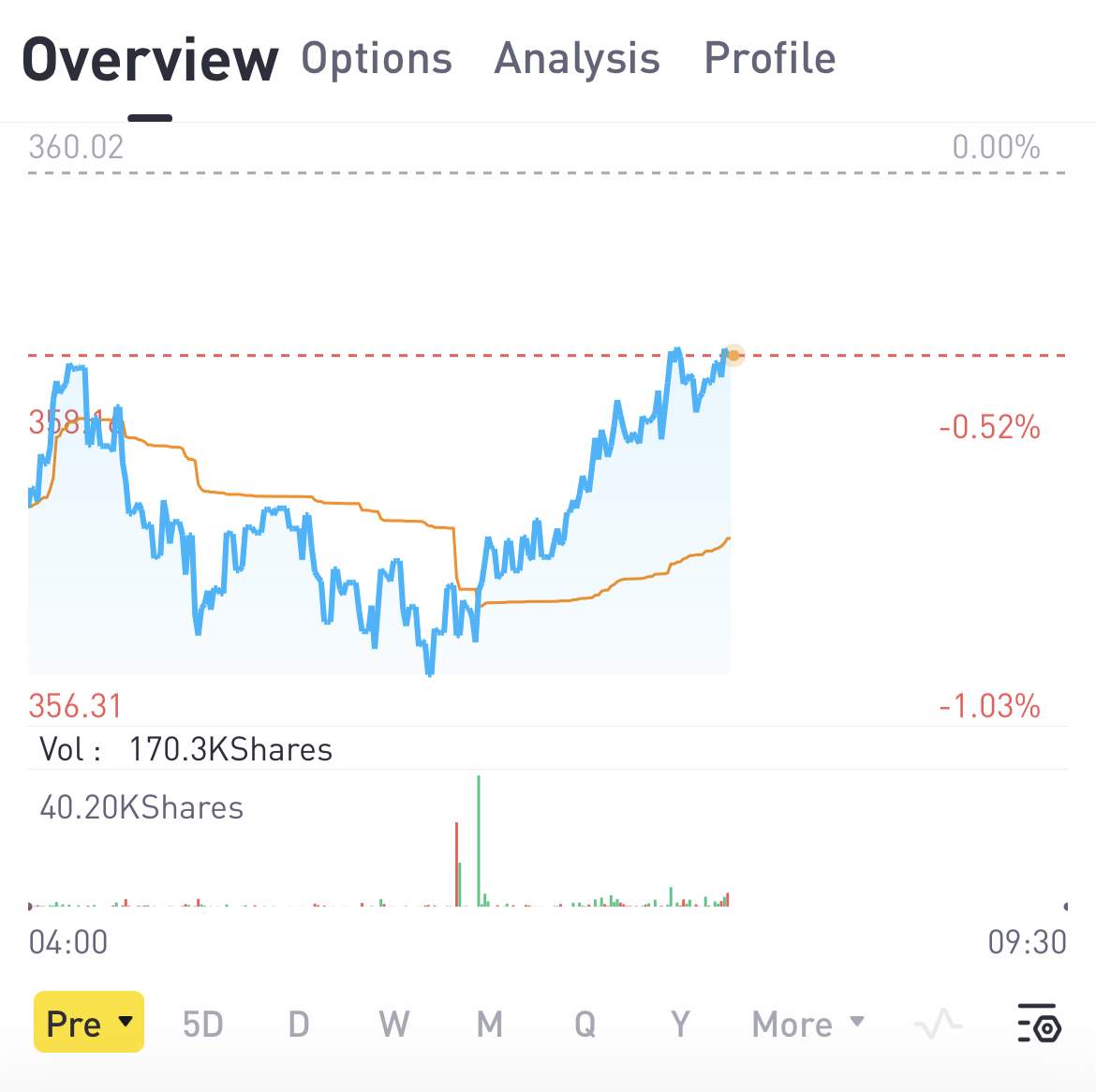
Click to visit the detailed page, and you'll be able to see the real-time quote of the ETF.
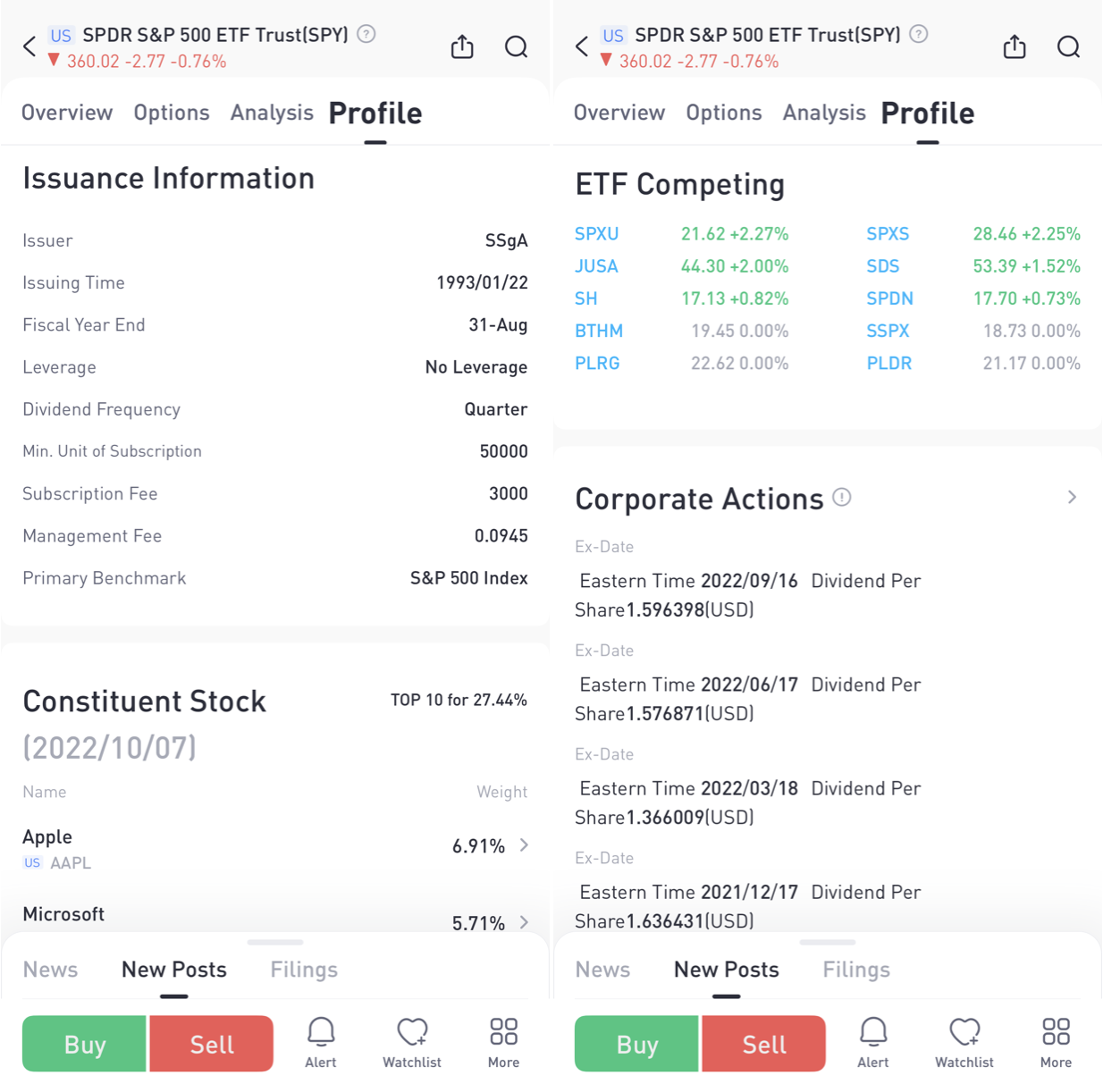
Under the tab "Profile" is comprehensive information about the ETF, such as constituent stocks and dividends
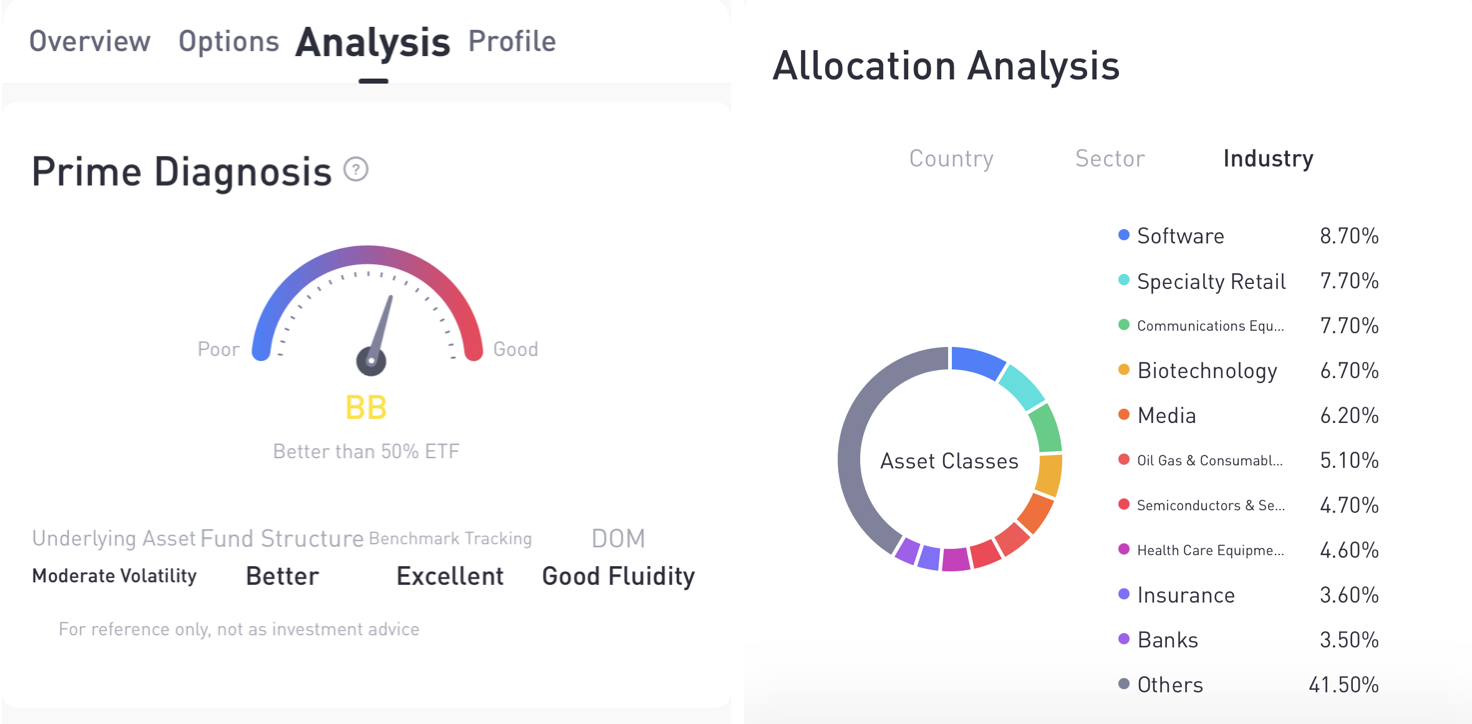
Under the tab Analysis of US ETFs, you can see analysis of the ETF, such as diagnosis and industry allocation
For advanced investors, ETF options can be a choice
Pre-and post-market trading is also available for US ETFs on Tiger Trade, which means a duration of 16.5 hours.
Click the 'Buy' button on the page, and input the price (in the case of a limit order) and quantity you want to buy and confirm. After the order is filled, you can see the ETF in your portfolio and its P&L.
Ready to dip your toe into investing? Join Tiger Trade today to gain access to the ASX, US and Hong Kong stock markets, get in-depth market data and access financial and earnings reports of companies you want to invest in. Plus, when you join, you'll receive welcome rewards including four $0 brokerage monthly trades on either ASX, US stocks, ETFs or US options, when you open an account and complete your first deposit*. Also enjoy zero FX fees for exchanging up to AUD 2,000** every month, and if you make an eligible deposit, you'll receive an AUD 20 cash voucher^.
*New clients & unfunded existing clients only. Only minimum brokerage waived for 4 ASX, US stocks or ETFs or options trades. Third-party fees and other fees still apply. **0 added spread and for AUD⇆USD only. Pass-through bid-ask spread still apply. ^Withdrawal restrictions apply. See T&Cs for details.
This content is for information purposes only and does not constitute an offer to sell, buy, recommend or endorse any financial products. We make no representations or warranties regarding the accuracy, truthfulness, or legality of any comments and views shared in the interview. Capital at risk. We do not provide financial advice that considers your personal objectives, financial situations or needs. Past performance is no guarantee of future results. See risk disclosures, PDS, TMD, FSG and T&Cs via our website before trading and seek independent advice if necessary. Tiger Brokers (AU) Pty Limited ABN 12 007 268 386 AFSL 300767.

